- News
- entertainment
- hindi
- bollywood
- #BigStory! Is ethnic criticism fair on actors?
Trending
This story is from August 7, 2021
#BigStory! Is ethnic criticism fair on actors?
Isn’t it an actor’s job to metamorphose into another character--both mentally and physically? Isn’t that why they train for hours on end to do justice to the character they will be playing on-screen, irrespective of whether it is a biopic? Is it then fair to criticise an actor for rising to the challenge, or even the filmmakers for casting them? ETimes spoke to directors, actors, film reviewers, and casting directors to understand if we are wrongly persecuting actors for doing their jobs in the name of inclusivity. Here’s what they have to say:

At a time when allegations of whitewashing are making award panels revise their selection committees, and cultural appropriation of any sort is frowned upon globally, it isn’t surprising to see that the potential cast of a biopic is being discussed even before any filmmaker manages to buy the rights to make a film on weightlifter, Mirabai Chanu’s life. The athlete who made India proud by clinching a silver medal at the ongoing Tokyo Olympics hails from a small village in the Northeast Indian state of Manipur. And Northeast actors are now hoping that if her life is adapted for the screen, one of them gets a chance to play her instead of an already known face from mainstream Bollywood. Manipuri model-turned-actress Lin Laishram opened the floor for debate when, in an interview, she said that it will be a shame if an actor of another ethnicity plays Mirabai Chanu in her biopic in today’s day and age. While she agreed that Priyanka Chopra had done complete justice to the character of Mary Kom in the eponymous 2014 biopic, she also expressed a desire to see a real Northeast Indian actor play the part.
Come to think of it, when the OG Disco Dancer of Bollywood, Mithun Chakraborty draped himself in a dhoti and set out to hunt with a bow and arrow to mark his Bollywood debut with Mrinal Sen’s 1976 film ‘Mrigayaa’, India was still coming to terms with its identity in the world to care much about how a marginalised community was being represented in cinema. But had the film released today, the woke generation, that advocates inclusivity, would have probably raised a stink on how the tribe could have been represented better by indigenous people on the celluloid. But who is to say one is right and the other wrong, as long as the message of the film is conveyed effectively?
After all, isn’t it an actor’s job to metamorphose into another character--both mentally and physically? Isn’t that why they train for hours on end to do justice to the character they will be playing on-screen, irrespective of whether it is a biopic? Is it then fair to criticise an actor for rising to the challenge, or even the filmmakers for casting them? ETimes spoke to directors, actors, film reviewers, and casting directors to understand if we are wrongly persecuting actors for doing their jobs in the name of inclusivity. Here’s what they have to say:
More representation, please

Ask Lin, who has worked in films like ‘Om Shanti Om’, ‘Mary Kom’ and ‘Rangoon’ as to how does she feel when she sees a non-Northeast Indian actor play one in a film and she retorts, “It’s like this. How would you feel if a Northeastern actor is cast to play wrestler Ravi Kumar Dahiya, who just won a silver for the country at the Olympics, in a biopic? We feel the same way”. The actress goes on to reiterate that inclusivity is key and that she would like to see more actors from the region play lead characters in films.
Mirroring her views, Adil Hussain, who hails from Assam, had also recently, in an interview, stated how he, too, would have preferred someone from the Northeast play the lead in ‘Mary Kom’, hoping that the makers of a Mirabai Chanu biopic, whenever one is made, are more imaginative with the casting.
As you show, so shall you need
When contacted, filmmaker Omung Kumar sounds exasperated on being asked why he didn’t cast a Northeastern actor as Mary Kom, pointing out that he had already made his reason clear during the film’s release. Inform him of all the social media discussions taking place over the five-year-old film and he reminds us of the reason again. “An actor can mould themselves into any character and that’s what Priyanka Chopra did beautifully. That’s why the film was so effective,” he asserts, adding that most of his other characters in the film were played by Manipuri actors.
“I have promoted Manipur the way no one else has, and I am proud of it. I gave a lot of Manipuri actors inroads to Bollywood through the film. The film’s reach also has to be considered while casting. We did look at a lot of Northeastern actors for the parts played by Priyanka and Darshan Kumaar too but no one suited the role. People think Darshan, who hails from Haryana, was from Manipur (laughs). So, if they suit the part, an actor can play any role. Amitabh Bachchan played Anthony Gonsalves without being Christian. If there is a South Indian character in the film, there’s no hard and fast rule that states we have to cast a South Indian actor only in the role,” Omung points out.
Local is good but not key
Omung presents a pertinent point when he says that. Who can fault Deepika Padukone’s portrayal of the spirited Meenalochni Meenamma Azhagusundaram in ‘Chennai Express’ or Alia Bhatt’s Ananya Swaminathan in ‘2 States’. For that matter, so many of Bollywood’s leading men have donned the turban when playing a Punjabi onscreen, no matter which Indian state they hailed from. To draw parallels, even the Punjabi sprinter, late Milkha Singh, was portrayed by the non-Punjabi Farhan Akhtar in ‘Bhaag Milkha Bhaag’.
“If the performance is good, a lot of casting sins are forgiven,” opines film critic Raja Sen, pointing out how no one around the world complained when Ben Kingsley--born to an English mother and Indian father, but with distinctive Anglicised features and accent--played Mohandas Karamchand Gandhi in Richard Attenborough’s 1982 film, ‘Gandhi’. “But today, no American or British director would cast a non-Indian actor to play the role because the pool has become bigger, and more Indian actors have now taken center stage. However, when a film like ‘Mary Kom’ is made, there aren’t 10 different Northeastern actresses who have shown box office potential. People ask, ‘Why Priyanka?’, but no one asks, ‘Why not this Northeastern actress’, because there aren’t many that come to mind. It is a sad thing but the playing field is opening up now, especially due to OTT; we are moving beyond the star system. In the coming days, we will see more authentic casting. Representation is extremely important but it can’t be the only metric,” he avers.
But, in his review of ‘Super 30’, Raja had written, “Hrithik Roshan isn’t bad, though his problematic brown face-paint is inconsistent to the point of distraction”. Ask him about it and he reasons, “My problem was not with Hrithik playing a Bihari guy but with the perception of how he was supposed to look while at it. You take a fair guy and then darken his skin for a role? I don’t understand it. There is no dearth of great actors who have a darker skin tone. If you are showing a person belonging to certain strata of the society, coming from a particular economic class, there is no need to show them as dark-skinned. It all depends on how they work on the body language and look to ensure that it never crosses the line to become appropriation or caricature”.
Director Amar Kaushik seems to be in complete agreement with Raja’s views. In all three of his films so far--‘Stree’, ‘Bala’, and the upcoming ‘Bhediya’--he has tried to tap into the local flavour of the region that the film has been shot in. One of the ways he does this is by insisting on making local actors a part of the film. “Apart from the main leads, the whole family and office staff in ‘Bala’ was from Kanpur, irrespective of how they were as actors. Ayushmann Khurrana’s grandfather, father, and brother in the film hadn’t acted ever; but they lent authenticity. Ditto for when we shot ‘Bhediya’ in Arunachal Pradesh; I had recruited the entire support cast from Arunachal itself, not even other Northeastern states,” he rattles off.
When asked if commercial reach was the reason that despite a cast full of local actors, he still chose to go with known names for his lead cast, Amar shoots back, saying, “The character on whom the whole film depends has to deliver a good performance. Every character is written with certain attributes in mind and it is not always possible to find an actor from the region to deliver on those parameters. So, then, you sign up a person who can most closely resemble your character and mould him/her. Rajkummar Rao, Abhishek Banerjee, and Aparshakti Khurrana weren’t as saleable names before the release of ‘Stree’. Even Ayushmann Khurrana’s ‘Andhadhun’ hadn’t released when we signed him up for ‘Bala’. It was organic casting based on character. I have never been asked to cast an actor based on his saleability at the box office”.
But Amar, too, has been accused of darkening his leading lady Bhumi Pednekar’s skin in ‘Bala’. “If I had cast a dark person instead of Bhumi Pednekar, I would be called out for that as well. You can say the same for Ayushmann’s character too and ask me why didn’t I cast an actual balding guy in the film. It all boils down to performance. What is the point of casting people who fit the bill but can’t perform,” he maintains.
Don’t shoot the actor
After she and co-star Bhumi Pednekar were called out for playing old and greying characters in ‘Saand Ki Aankh’, Taapsee Pannu is now aiming to bowl everyone over with her turn as a Kutchi girl in ‘Rashmi Rocket’. A girl of Punjabi descent, who was raised in Delhi, playing a rural sprinter may seem out of place for those not well-versed with the actress’s penchant for pushing her limits. So, what does she feel when social media trolls and even fellow actors retaliate against her for playing who she isn’t? “As actors, we love it when we are challenged to go out of our comfort zones, and transform ourselves physically for a character. When that happens and you don’t look like you aren’t in real life, people question it. But trolls forget that portraying what we are not is an actor’s basic job profile. If we start playing only the characters that are the same age as us, have the same background and look, we will be pulled up for doing the same thing every time. I don’t understand why we are pulled up for doing our job,” sighs the actress, adding that if you give her a character that is far removed from the Taapsee she is in real life, and she loves the script, she won’t think twice before saying ‘yes’ to the film.
“Be it playing an older or younger woman, man or woman, transgender, lesbian, gay--I’ll take it up as a challenge. I am glad that after ‘Saand Ki Aaankh’ came out, people loved it, we got several awards for it, and all the debates are resting in peace now. As for ‘Rashmi Rocket’, I am mentally prepared for people to find some flaw or the other; these people always see the glass as half empty. My character’s skin colour in the film isn’t so because of where she is from but because her job requires her to be exposed to the sun several hours a day. People need to understand the logic behind why an actor is trying to look a certain way rather than just questioning it,” she states, rather matter-of-factly.
Cast a spell
Casting director Mukesh Chhabra seems happy to be part of a discussion on film casting and says he is glad that people are finally recognising how important casting the right person in the right role is. “As of today, my main focus is to cast actors belonging to the region a film is set in. I have always been pro towards casting authentic actors. I feel any project that is based in a particular area should have actors that are habitants or actors that belong to the area,” he says rather earnestly.
The casting director then goes on to say that while he can’t reveal much right now, he has recently cast for a film where all the actors are from the Northeast. “We have done a few ads too that involve actors from the region. There are many more projects that are now being centered around the Northeast. So much so, that I am planning to open an office there. There is a lot of potential and unexplored talent in the Northeast and I cannot wait for the world to witness it,” he gushes, summing up the debate on what can only be termed to be a positive note.
Come to think of it, when the OG Disco Dancer of Bollywood, Mithun Chakraborty draped himself in a dhoti and set out to hunt with a bow and arrow to mark his Bollywood debut with Mrinal Sen’s 1976 film ‘Mrigayaa’, India was still coming to terms with its identity in the world to care much about how a marginalised community was being represented in cinema. But had the film released today, the woke generation, that advocates inclusivity, would have probably raised a stink on how the tribe could have been represented better by indigenous people on the celluloid. But who is to say one is right and the other wrong, as long as the message of the film is conveyed effectively?
After all, isn’t it an actor’s job to metamorphose into another character--both mentally and physically? Isn’t that why they train for hours on end to do justice to the character they will be playing on-screen, irrespective of whether it is a biopic? Is it then fair to criticise an actor for rising to the challenge, or even the filmmakers for casting them? ETimes spoke to directors, actors, film reviewers, and casting directors to understand if we are wrongly persecuting actors for doing their jobs in the name of inclusivity. Here’s what they have to say:
More representation, please
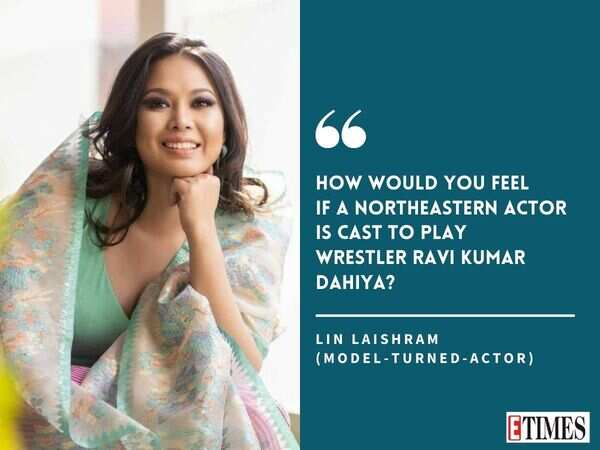
Ask Lin, who has worked in films like ‘Om Shanti Om’, ‘Mary Kom’ and ‘Rangoon’ as to how does she feel when she sees a non-Northeast Indian actor play one in a film and she retorts, “It’s like this. How would you feel if a Northeastern actor is cast to play wrestler Ravi Kumar Dahiya, who just won a silver for the country at the Olympics, in a biopic? We feel the same way”. The actress goes on to reiterate that inclusivity is key and that she would like to see more actors from the region play lead characters in films.
Mirroring her views, Adil Hussain, who hails from Assam, had also recently, in an interview, stated how he, too, would have preferred someone from the Northeast play the lead in ‘Mary Kom’, hoping that the makers of a Mirabai Chanu biopic, whenever one is made, are more imaginative with the casting.
As you show, so shall you need
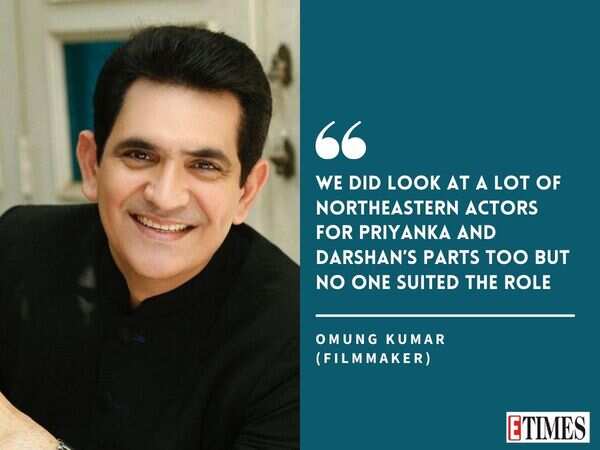
When contacted, filmmaker Omung Kumar sounds exasperated on being asked why he didn’t cast a Northeastern actor as Mary Kom, pointing out that he had already made his reason clear during the film’s release. Inform him of all the social media discussions taking place over the five-year-old film and he reminds us of the reason again. “An actor can mould themselves into any character and that’s what Priyanka Chopra did beautifully. That’s why the film was so effective,” he asserts, adding that most of his other characters in the film were played by Manipuri actors.
“I have promoted Manipur the way no one else has, and I am proud of it. I gave a lot of Manipuri actors inroads to Bollywood through the film. The film’s reach also has to be considered while casting. We did look at a lot of Northeastern actors for the parts played by Priyanka and Darshan Kumaar too but no one suited the role. People think Darshan, who hails from Haryana, was from Manipur (laughs). So, if they suit the part, an actor can play any role. Amitabh Bachchan played Anthony Gonsalves without being Christian. If there is a South Indian character in the film, there’s no hard and fast rule that states we have to cast a South Indian actor only in the role,” Omung points out.
Local is good but not key
Omung presents a pertinent point when he says that. Who can fault Deepika Padukone’s portrayal of the spirited Meenalochni Meenamma Azhagusundaram in ‘Chennai Express’ or Alia Bhatt’s Ananya Swaminathan in ‘2 States’. For that matter, so many of Bollywood’s leading men have donned the turban when playing a Punjabi onscreen, no matter which Indian state they hailed from. To draw parallels, even the Punjabi sprinter, late Milkha Singh, was portrayed by the non-Punjabi Farhan Akhtar in ‘Bhaag Milkha Bhaag’.
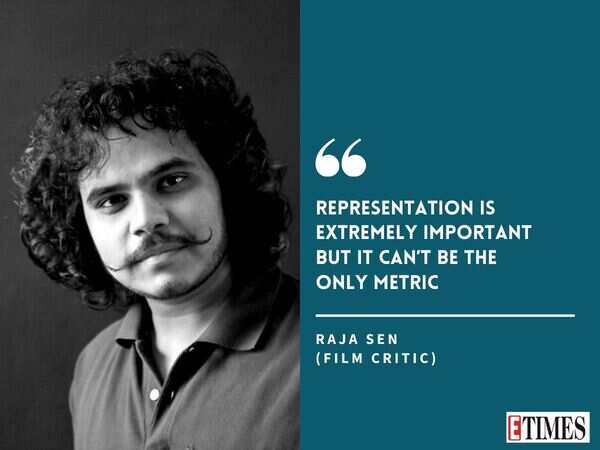
“If the performance is good, a lot of casting sins are forgiven,” opines film critic Raja Sen, pointing out how no one around the world complained when Ben Kingsley--born to an English mother and Indian father, but with distinctive Anglicised features and accent--played Mohandas Karamchand Gandhi in Richard Attenborough’s 1982 film, ‘Gandhi’. “But today, no American or British director would cast a non-Indian actor to play the role because the pool has become bigger, and more Indian actors have now taken center stage. However, when a film like ‘Mary Kom’ is made, there aren’t 10 different Northeastern actresses who have shown box office potential. People ask, ‘Why Priyanka?’, but no one asks, ‘Why not this Northeastern actress’, because there aren’t many that come to mind. It is a sad thing but the playing field is opening up now, especially due to OTT; we are moving beyond the star system. In the coming days, we will see more authentic casting. Representation is extremely important but it can’t be the only metric,” he avers.
But, in his review of ‘Super 30’, Raja had written, “Hrithik Roshan isn’t bad, though his problematic brown face-paint is inconsistent to the point of distraction”. Ask him about it and he reasons, “My problem was not with Hrithik playing a Bihari guy but with the perception of how he was supposed to look while at it. You take a fair guy and then darken his skin for a role? I don’t understand it. There is no dearth of great actors who have a darker skin tone. If you are showing a person belonging to certain strata of the society, coming from a particular economic class, there is no need to show them as dark-skinned. It all depends on how they work on the body language and look to ensure that it never crosses the line to become appropriation or caricature”.
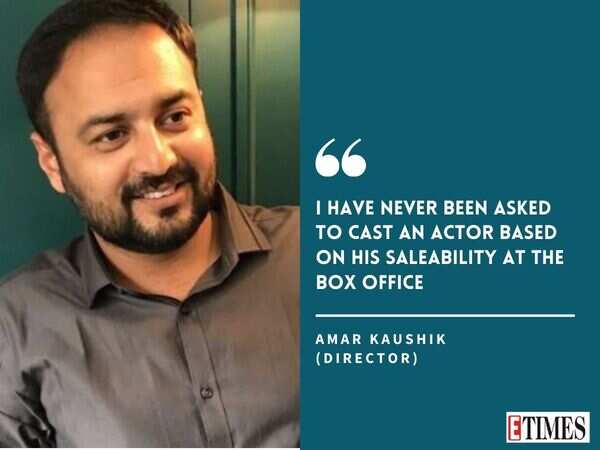
Director Amar Kaushik seems to be in complete agreement with Raja’s views. In all three of his films so far--‘Stree’, ‘Bala’, and the upcoming ‘Bhediya’--he has tried to tap into the local flavour of the region that the film has been shot in. One of the ways he does this is by insisting on making local actors a part of the film. “Apart from the main leads, the whole family and office staff in ‘Bala’ was from Kanpur, irrespective of how they were as actors. Ayushmann Khurrana’s grandfather, father, and brother in the film hadn’t acted ever; but they lent authenticity. Ditto for when we shot ‘Bhediya’ in Arunachal Pradesh; I had recruited the entire support cast from Arunachal itself, not even other Northeastern states,” he rattles off.
When asked if commercial reach was the reason that despite a cast full of local actors, he still chose to go with known names for his lead cast, Amar shoots back, saying, “The character on whom the whole film depends has to deliver a good performance. Every character is written with certain attributes in mind and it is not always possible to find an actor from the region to deliver on those parameters. So, then, you sign up a person who can most closely resemble your character and mould him/her. Rajkummar Rao, Abhishek Banerjee, and Aparshakti Khurrana weren’t as saleable names before the release of ‘Stree’. Even Ayushmann Khurrana’s ‘Andhadhun’ hadn’t released when we signed him up for ‘Bala’. It was organic casting based on character. I have never been asked to cast an actor based on his saleability at the box office”.
But Amar, too, has been accused of darkening his leading lady Bhumi Pednekar’s skin in ‘Bala’. “If I had cast a dark person instead of Bhumi Pednekar, I would be called out for that as well. You can say the same for Ayushmann’s character too and ask me why didn’t I cast an actual balding guy in the film. It all boils down to performance. What is the point of casting people who fit the bill but can’t perform,” he maintains.
Don’t shoot the actor
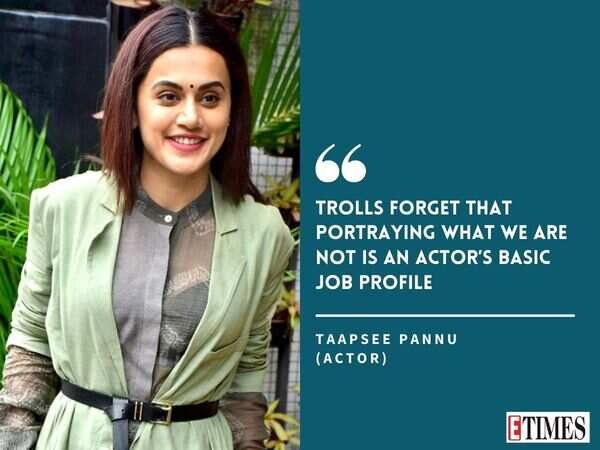
After she and co-star Bhumi Pednekar were called out for playing old and greying characters in ‘Saand Ki Aankh’, Taapsee Pannu is now aiming to bowl everyone over with her turn as a Kutchi girl in ‘Rashmi Rocket’. A girl of Punjabi descent, who was raised in Delhi, playing a rural sprinter may seem out of place for those not well-versed with the actress’s penchant for pushing her limits. So, what does she feel when social media trolls and even fellow actors retaliate against her for playing who she isn’t? “As actors, we love it when we are challenged to go out of our comfort zones, and transform ourselves physically for a character. When that happens and you don’t look like you aren’t in real life, people question it. But trolls forget that portraying what we are not is an actor’s basic job profile. If we start playing only the characters that are the same age as us, have the same background and look, we will be pulled up for doing the same thing every time. I don’t understand why we are pulled up for doing our job,” sighs the actress, adding that if you give her a character that is far removed from the Taapsee she is in real life, and she loves the script, she won’t think twice before saying ‘yes’ to the film.
“Be it playing an older or younger woman, man or woman, transgender, lesbian, gay--I’ll take it up as a challenge. I am glad that after ‘Saand Ki Aaankh’ came out, people loved it, we got several awards for it, and all the debates are resting in peace now. As for ‘Rashmi Rocket’, I am mentally prepared for people to find some flaw or the other; these people always see the glass as half empty. My character’s skin colour in the film isn’t so because of where she is from but because her job requires her to be exposed to the sun several hours a day. People need to understand the logic behind why an actor is trying to look a certain way rather than just questioning it,” she states, rather matter-of-factly.
Cast a spell
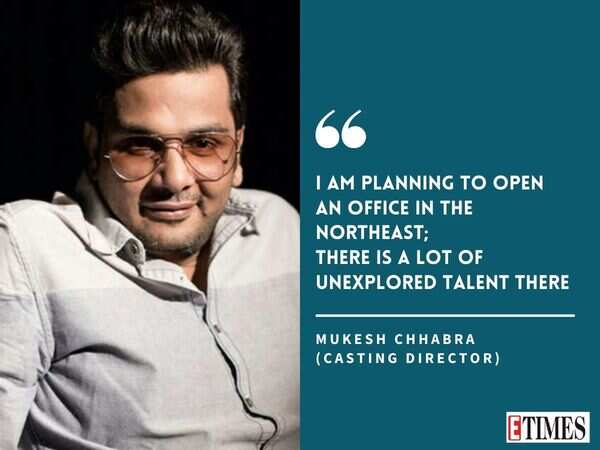
Casting director Mukesh Chhabra seems happy to be part of a discussion on film casting and says he is glad that people are finally recognising how important casting the right person in the right role is. “As of today, my main focus is to cast actors belonging to the region a film is set in. I have always been pro towards casting authentic actors. I feel any project that is based in a particular area should have actors that are habitants or actors that belong to the area,” he says rather earnestly.
The casting director then goes on to say that while he can’t reveal much right now, he has recently cast for a film where all the actors are from the Northeast. “We have done a few ads too that involve actors from the region. There are many more projects that are now being centered around the Northeast. So much so, that I am planning to open an office there. There is a lot of potential and unexplored talent in the Northeast and I cannot wait for the world to witness it,” he gushes, summing up the debate on what can only be termed to be a positive note.
End of Article
FOLLOW US ON SOCIAL MEDIA








entertainment videos
Featured In Movies
Popular Categories
Entertainment NewsBollywood NewsTollywood NewsKollywood NewsMollywood NewsMovie ReviewsLatest Hindi MoviesLatest Tamil MoviesMX PlayerParenting TipsHome RemediesWeight LossBeauty TipsParenting TipsHindi VideosHindi Video SongsBhojpuri Music VideosLatest Telugu MoviesBhojpuri Music VideoHindi TV News
Trending in Entertainment
Latest MoviesBollywood MoviesHollywood MoviesTamil Movies 2024Telugu Movies 2024Malayalam Movies 2024Kannada Movies 2024Marathi Movies 2024Bengali Movies 2024Top Rated Movies 2024Best Hindi MoviesBest English MoviesBest Telugu MoviesBest Tamil MoviesBest Malayalam MoviesBest Kannada MoviesBest Bengali MoviesUpcoming Hindi MoviesBest Movies Of All TimeBest Hindi Movies of All Time
Trending in Etimes
Horoscope TodayNumerology Predictions TodayProject 2025Taylor SwiftUS Presidential Debate Key TakeawaysSpringfield Eating PetsMelania TrumpJoe WilsonVice Presidential DebateMeghan MarkleKamala HarrisDonald TrumpPatriot Day 2024Diabetes RiskHappy Mindfulness Day 2024Trump Vs HarrisJoe JonasNational Day of Encouragement 2024Dave Bautista
Trending in TV
Trending in Lifestyle
Trending in Regional
Movie Reviews
Visfot ReviewThalapathy Is The G.O.A.T ReviewRebel Ridge ReviewDetective Conan vs. Kid the Phantom Thief ReviewBeetlejuice Beetlejuice ReviewPad Gaye Pange ReviewA Wedding Story ReviewThe Diary Of West Bengal ReviewTikdam ReviewKinds Of Kindness ReviewAfraid ReviewThe Deliverance ReviewBlue Lock: Episode Nagi ReviewDaddio Review
Upcoming Hindi Movies
Upcoming Regional Movies
Latest News
Kapil Sharma gives fans a peek into his Ganesh Chaturthi festivities with wife GinniNot MS Dhoni and Rohit Sharma, Gautam Gambhir calls this Indian player 'Shahenshah'. WatchPolice registered 10 cases against Ganapati mandals for using laser beam lightsMIT researchers develop eco-friendly water filter to eliminate “forever chemicals” and heavy metalsThe Zodiac Signs Most Naturally Inclined to HealingWhy Banyan trees survive for centuries and spread indefinitely?Telangana government pushes for increased flood relief from CentrePolicy of 'Padak Lao, Pad Pao' will be implemented again for the sportspersons, says Deepender HoodaBest 20000mAh Power Banks To Power Your Devices Wherever You GoWalking dog in Goa? Mouth guard, leash soon to be mustDonald Trump and Kamala Harris shake hands as they meet for first time on debate stage: Watch the 'awkward' momentKamala may have won debate. But election is still too close to callCommunal violence erupts in Karnataka during Ganpati Visarjan, section 144 imposed'On basis of fairness and equality': Bangladesh seeks good relations with India, says YunusMpox kills two, six other confirmed cases in Cameroon: GovernmentTrump's claim about sending Taliban leader Abdul his house photo fuels social media frenzyJalen Ramsey demands action against Miami Police following Tyreek Hill's pulled from car49ers RB Christian McCaffrey misses win over Jets
Other Group Sites -
ETimes is an Entertainment, TV & Lifestyle industrys promotional website and carries advertorials and native advertising.